
North American Crop Update
- Monday July 26, 2005
This analysis featured in the July 26, 2005 issue of the HGCA's MI Prospects, Volume 8, Number 2
Key points
- Mediocre US winter crop
- Good spring wheat crop prospects
- Maize and soybean crops threatened by weather
- Canadian crops mixed but prospect for improved supplies
North American crop development has generally been less favourable than last year. US winter wheat conditions have deteriorated but a mediocre crop is still anticipated. In contrast US spring wheats are developing favourably. As of mid July harvest prospects for maize and soybeans appeared very prone to weather development. Crop prospects on the Canadian prairies are very mixed, but with the exception of waterlogged crops in eastern Manitoba are generally favourable.
US Winter Wheat
The USDA’s July 1 forecast placed this year’s US winter wheat harvest at 41.5M tonnes, up two percent from last year. This forecast was made when about half the crop was harvested and a further 40 percent was within a month of maturity and provides a fairly accurate indication of final outcomes.
The condition of the US winter wheat crop has generally declined from the very favourable condition early in the spring but is still rated as relatively good(Graph 1). A yield of 3.0 tonnes per hectare is forecast, up one and two percent, respectively, from the month earlier forecast and last year’s level. An increase in hard red and soft white wheat offset a decline in soft red.
continue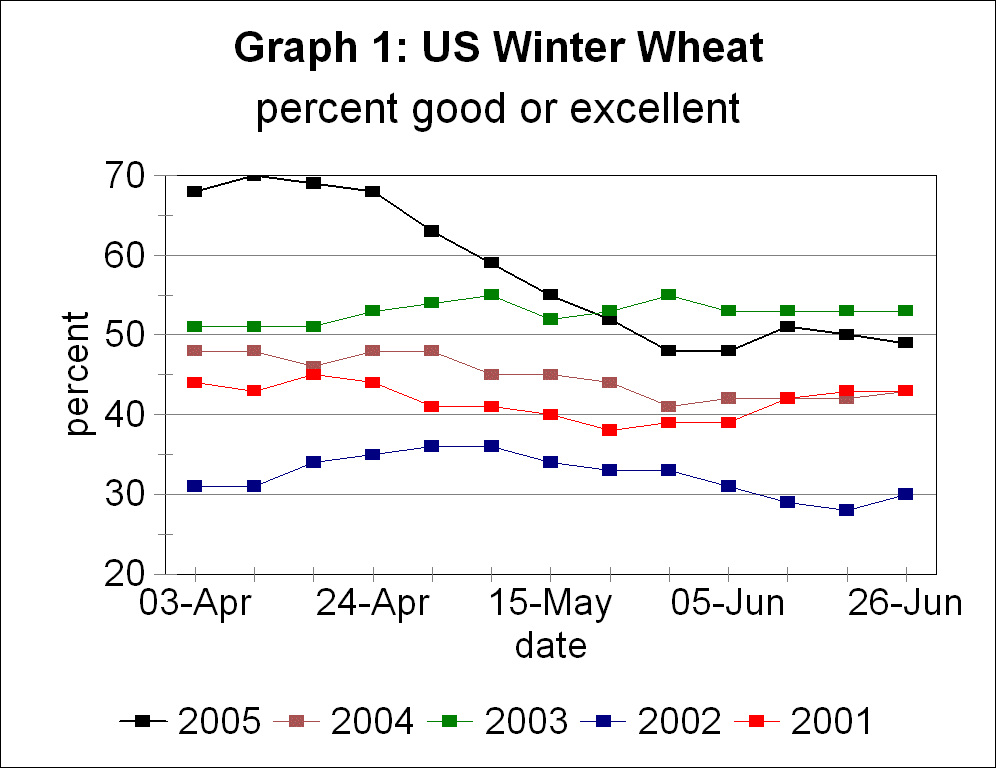 continued
In a longer term perspective, the crop is three percent below the ten-year average with higher yields more than offset by a lower harvest area, which, the drought years of 2001 and 2002 excepted, the smallest in more than 30 years. In a market context this year’s output forecast of 41.5M tonnes compares with last season’s domestic use and exports of 43.4M tonnes. The USDA is forecasting a 10 percent decline in exports and a 2.7M tonne increase in 2006 carryover stocks of winter wheats.
New crop wheat prices, as reflected in Chicago Board of Trade September futures, have generally traded in US$3.20 to US$3.50 per bushel range with any strengthening of prices probably the result of the weakness of the US dollar rather than any improvement in wheat market fundamentals.
US Spring Wheat
The USDA’s first durum production forecast is for a 2.6M tonne harvest, five percent above last year’s year crop with higher yields on a larger area. A 3.5 percent increase in output of other spring wheats, predominantly hard reds, is forecast as a result of a similar increase in harvested area. Spring wheat crop conditions are again very favourable this year (Graph 2) and last year’s heavy yields are forecast to be repeated.
continue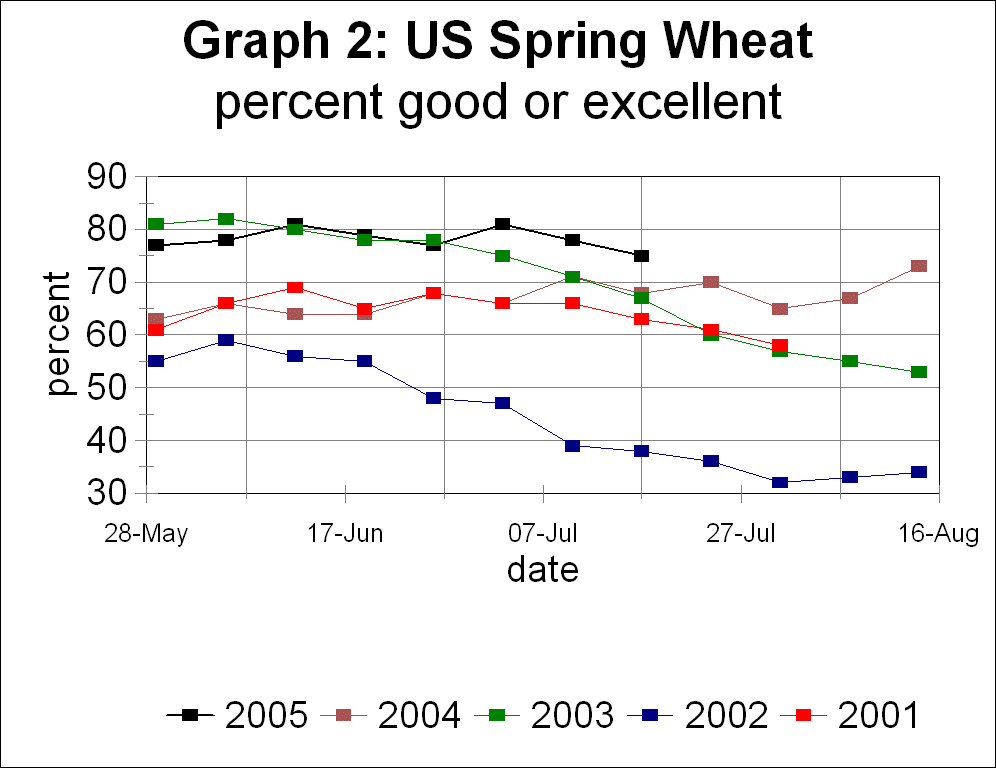 continued
Production of all spring wheat is forecast to exceed slightly last year’s domestic use and exports. The USDA is, however, currently projecting decline in US exports and an increase in 2006 carryover, possibly with the expectation of improved supplies of competing Canadian hard red spring wheats.
US Maize and Soybeans
The USDA estimates 81.592M acres were seeded to maize this spring, slightly more than anticipated by the Prospective Planting survey in March and 0.8 percent more than planted in 2004. Soybean plantings were 73.303M acres, almost one precent less than the Prospective Plantings and 3.5 percent less than in 2004. Generally price prospects were less favourable this spring than last, and a relatively early planting season favoured the planting of maize at the expense of soybeans.
While the USDA does not forecast maize and soybean yields until August it is already evident that the 2005 crops will be smaller than the record harvests of last year. Crop ratings for both crops have generally declined as the season has progressed and are well below those of last year(Graphs 3 and 4). Dry conditions have developed in and around the state of Illinois and have resulted in a rapid decline in crop ratings in this area in recent weeks. This is almost certainly more critical for maize which is in the critical silking stage than for soybeans which are more sensitive to moisture stress during pod filing in August.
continue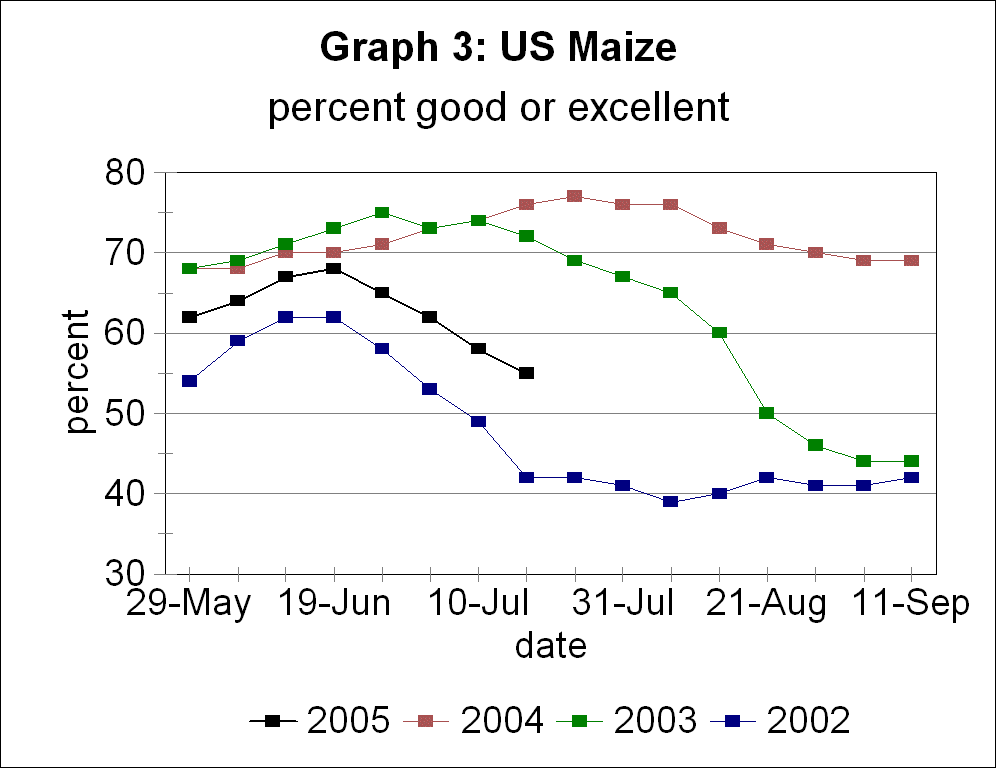 continued
continue
continued
continue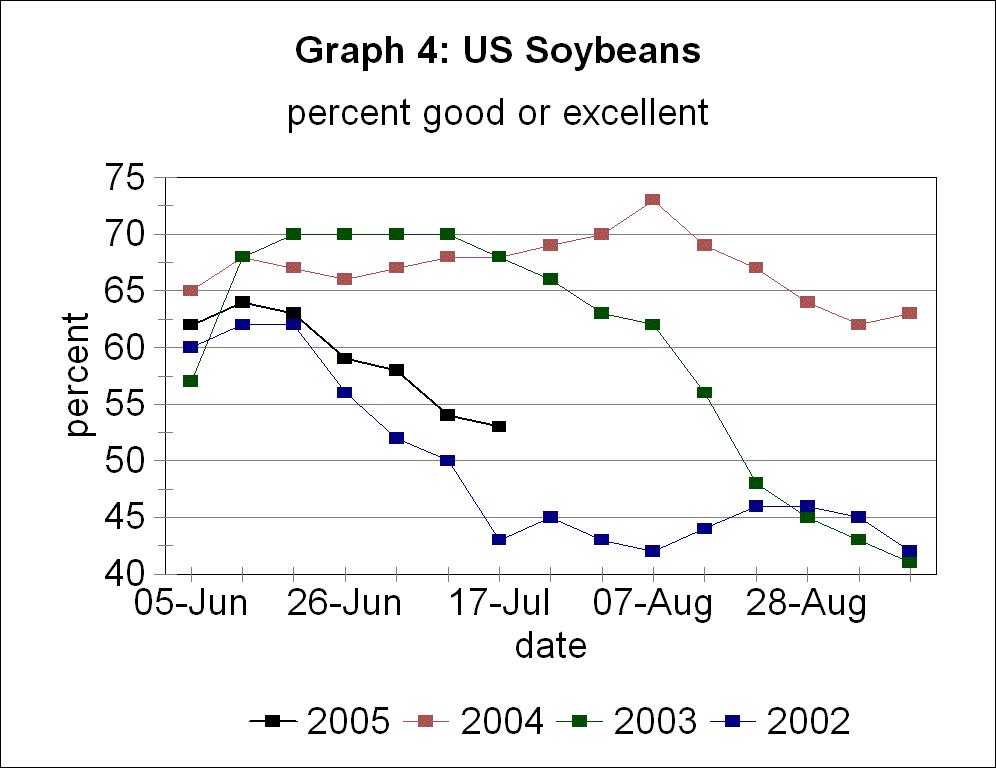 continued
The full implications of this development are unclear and certainly dependent on weather conditions over the coming weeks. As a result traditional weather market conditions prevail in the US at this time. Over the last three weeks new crop maize has traded between $2.30 and $2.75 per bushel and generally erratically higher. This has probably been driven as much by perceptions as what damage could be sustained in the next few weeks and influence the supply and demand balance, rather than what has already sustained. The impact on soybean markets has so far been less dramatic.
Canadian Crops
Crop development in western Canada has, in aggregate, been favourable. But as much as 400,000 hectares may have been lost to prolonged ware logging in eastern Manitoba where record rainfall has been recorded over a wide area. Elsewhere on the Prairies crops have generally developed without being subject to moisture stress the more usual crop yield limiter.
Maize crops in Ontario could be threatened if the drought area centred on Illinois widens.
Statistics Canada June area survey indicated Canadian farmers seeded 36.7M hectares to major crops, one percent less than last year but one percent more then the April Seeding Intentions survey indicated(Table 1). Total wheat area was estimated at 10.7M hectares, one percent lower then in 2004 with a two percent increase in durum more than offset by a decline in other wheats.
continue
--------------------------------------------------------------
Table 1: Seeded Area of Canadian Field Crops
--------------------------------------------------------------
                 2004     2005    2005 2005 seeded as % of:
               Seeded Intended	Seeded 	  2004      2005
                                         seeded intended
--------------------------------------------------------------
                -----'000 hectare-----  -----percent-------

Spring Wheat    7,528    7,367   7,449      99       101
Durum	        2,230    2,353   2,280     102        97
Total wheat    10,341   10,186  10,194      99       100
Barley          4,678    4,700   4,580      98        97
Oats            1,995    2,292   2,019     101        88
Corn for Grain  1,185    1,140   1,121      95        98
Canola          5,320    4,887   5,593     105       114
Soybeans        1,229    1,225   1,207      98        99
Flaxseed          728      868     868     119       100
Dry Field peas  1,388    1,362   1,410     102       104
TOTAL          36,921   36,381  36,722      99       101
Summerfallow    3,610    3,909   3,424      95        88

Source: Statistics Canada
----------------------------------------------------------------
Data source: USDA
continued
The area seeded to oilseeds generally increased with canola area up five percent and flaxseed up almost 20 percent, but the soybean area in eastern Canada declined two percent. Feed grain acreages were generally lower with the area sown to barley two percent lower and maize five percent lower. The oats area, however, was up one percent. The area sown to dry peas continues to increase with a record 1.4M hectares.
Agriculture Canada anticipates a 10 percent increase in Canadian exports of grains and oilseeds due to higher supply and better quality, particularly for wheat and canola. But Canadian prices are expected to continue to be pressured by lower world prices and the relative strength of the Canadian dollar
David Walker 01603 705 153
top of page